 |
Newly Diagnosed > Preparing for Breast Surgery & Returning Home |
 |
What to Pack
Before you go to the hospital for surgery, there are a few useful items you may wish to consider packing in your suitcase:
1. SOFTEE® TWO Recovery Camisole
2. A bathrobe that buttons, ties, or zips up the front, and easy to slide into slipper shoes.
3. A loose fitting blouse or shirt to wear over your SOFTEE® that buttons or zips up the front for going home.
4. Loose fitting elastic waist pants or skirt, for ease in dressing.
After Surgery
After you are settled in your hospital room you may find that you feel quite well and alert, however it is best to use caution when you first sit up or try to get out of bed. It takes time for the anesthesia to fully wear off and you may become light headed or nauseous.
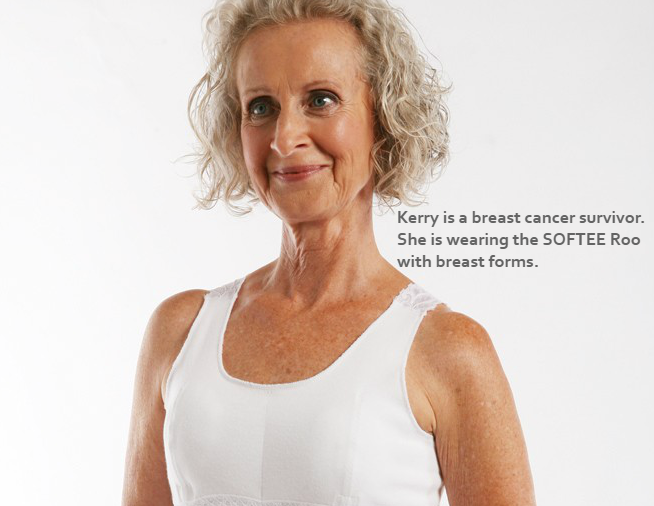
When the doctor advises you it is time to get out of bed it is likely that you may feel well enough to take a short walk and use the bathroom on your own. Your SOFTEE® TWO Recovery Camisole can be worn directly over dressings or bandages to immediately restore shape and provide gentle protection. Whether you have one or two sets of post-op surgical drains, the bulb(s) will comfortably slip into the front 'Roo' pocket of the SOFTEE® TWO, where they will remain convenient and secure.
Initially any arm movement on the affected side can be mildly tight and painful, so pulling clothing over your head is not recommended. The SOFTEE® is designed to be stepped into and pulled up over your hips, so the memory fabric will stretch then reshape to comfortably hug your body. Adjusting the soft breast form(s) for the correct size and placement is easily done on the outside of the SOFTEE® while you are wearing the camisole. Your SOFTEE® comes with step by step illustrated instructions to easily customize for your individual needs.
Release from the Hospital
The length of your hospital stay will depend on several factors. Most women are able to leave the hospital the day of, or the day after surgery, however some may remain for a few days. After the first 24 hours, pain and discomfort is usually relieved with oral pain medication. If you have assistance and support at home you may be discharged anywhere from within several hours, to the next day after your surgery. It is important to remember that you should not expect to return to your normal routine immediately. Even though you may feel fine, your body will require rest and sleep for several days in order for you to have a complete recovery.
At discharge the nurse will explain how to change your bandages or dressings, and measure the fluid in your post-op drain(s). You will be asked to keep the incision area dry and clean to promote healing and avoid infection, and not to shower or bathe until after the doctor removes the drains which is normally within 7-10 days.
Returning Home
Once home from the hospital it may be difficult for some women to relax and rely on others to assist them. This is a good opportunity to let family members lend their help and support. Let them take on household chores, prepare meals and run errands. It is important to remember that even though the woman may feel up to returning to her regular routine, her body needs rest and time to heal. Don't expect too much too soon, it will be a few weeks before normal energy level returns.
After surgery the physician will review the patients pathology report to decide if any additional treatment is required. The doctor may recommend hormonal therapy, radiation therapy and/or chemotherapy. The doctor may send a woman for a consultation with an Oncologist and/or Radiologist before deciding which treatment or combination of treatments is most effective for her circumstances.
Upon returning home there are simple exercises you may begin at once to help you regain range of motion in the affected arm. Be sure to discuss the steps with your doctor before you begin any exercise program.
|